

AI Skills help students and professionals understand, use, and evaluate artificial intelligence in education and work. Learners need more than the ability to enter a prompt. They must ask clear questions, check results, protect data, and recognize when human judgment is essential.
Developing AI skills also encourages critical thinking, creativity, and problem-solving. By learning how to work with AI-powered tools, students can improve their research abilities, complete educational projects, and explore new ways of acquiring knowledge. Professionals can use these skills to increase productivity, automate routine tasks, and adapt to changing workplace demands. As artificial intelligence continues to evolve, AI literacy is becoming an important part of modern education and future career preparation.
Essential AI Skills
| Skill | What It Helps Learners Do |
|---|---|
| AI Literacy | Understand what AI tools can and cannot do |
| Prompt Writing | Ask clear questions and refine instructions |
| Critical Thinking | Check AI-generated answers and identify errors |
| Data Awareness | Protect personal information and respect privacy |
| Creativity | Develop ideas with responsible AI assistance |
| Collaboration | Combine AI tools with teamwork and communication |
Building AI skills starts with practice. Students can compare AI-generated explanations with textbooks, use chatbots to brainstorm ideas, and discuss why an answer may be incomplete. Teachers can guide these activities and show learners how to verify information rather than accept every output.
Benefits of Learning AI Skills
Developing AI skills can help learners:
- research topics and organize information effectively;
- improve digital confidence and problem-solving;
- create presentations, drafts, and learning materials;
- understand the limits and risks of automated systems;
- prepare for further study and changing career needs.
Digital resources have also become an important part of modern school education. Schools, teachers, and educational organizations use websites to publish learning materials, assignments, news, schedules, and useful information for students and parents.
earlylearning
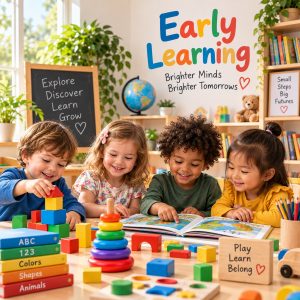
In earlylearning, educators can introduce age-appropriate digital activities while prioritizing play, reading, and face-to-face interaction. Adults should supervise digital tools and choose materials that support curiosity without replacing hands-on experiences.
How to Develop AI Skills
A practical learning plan can include:
- experimenting with AI tools for simple educational tasks;
- comparing generated answers with reliable sources;
- practicing clear prompts and reviewing the results;
- learning about privacy, bias, and academic honesty;
- completing projects that combine AI with original thinking.
AI should support learning, not replace it. For example, a student might ask for feedback on an essay but still write the final work independently. In training, AI can assist with research or tasks while people remain responsible for decisions and accuracy.
AI Skills are useful across education and employment. With steady practice, guidance, and critical thinking, learners can use new technologies confidently while developing abilities that remain valuable beyond any single tool.
Explore our news site for the latest insights into artificial intelligence, AI education, emerging technologies, and practical ways to develop AI skills for effective learning, professional development, and future career opportunities.












A very informative article! AI skills are becoming essential for students and professionals who want to keep up with modern technology and prepare for future career opportunities.
I especially liked the focus on critical thinking and responsible AI use. Learning how to evaluate AI-generated information is just as important as knowing how to use AI tools.
Artificial intelligence offers exciting opportunities for education. Developing AI skills can help students improve their research abilities, creativity, and problem-solving skills.
The section about developing AI skills is particularly useful. Practical experience with AI tools can help learners become more confident and independent.
AI literacy should become an important part of modern education. Understanding how artificial intelligence works can prepare students for a rapidly changing job market.
Great overview of AI skills! Combining artificial intelligence with human creativity, critical thinking, and continuous learning can create valuable opportunities for academic and professional growth.